The best AI agent products released this week span memory management, multi-agent orchestration, and tool-use frameworks — and the signal-to-noise ratio is worse than ever.
Every week, dozens of autonomous assistant launches compete for developer attention, but only a handful ship with the architectural depth that actually matters in production. This roundup filters for agent releases in 2026 that demonstrate concrete improvements in reliability, latency, context handling, or interoperability with existing stacks — not just a new chat wrapper with a press release.
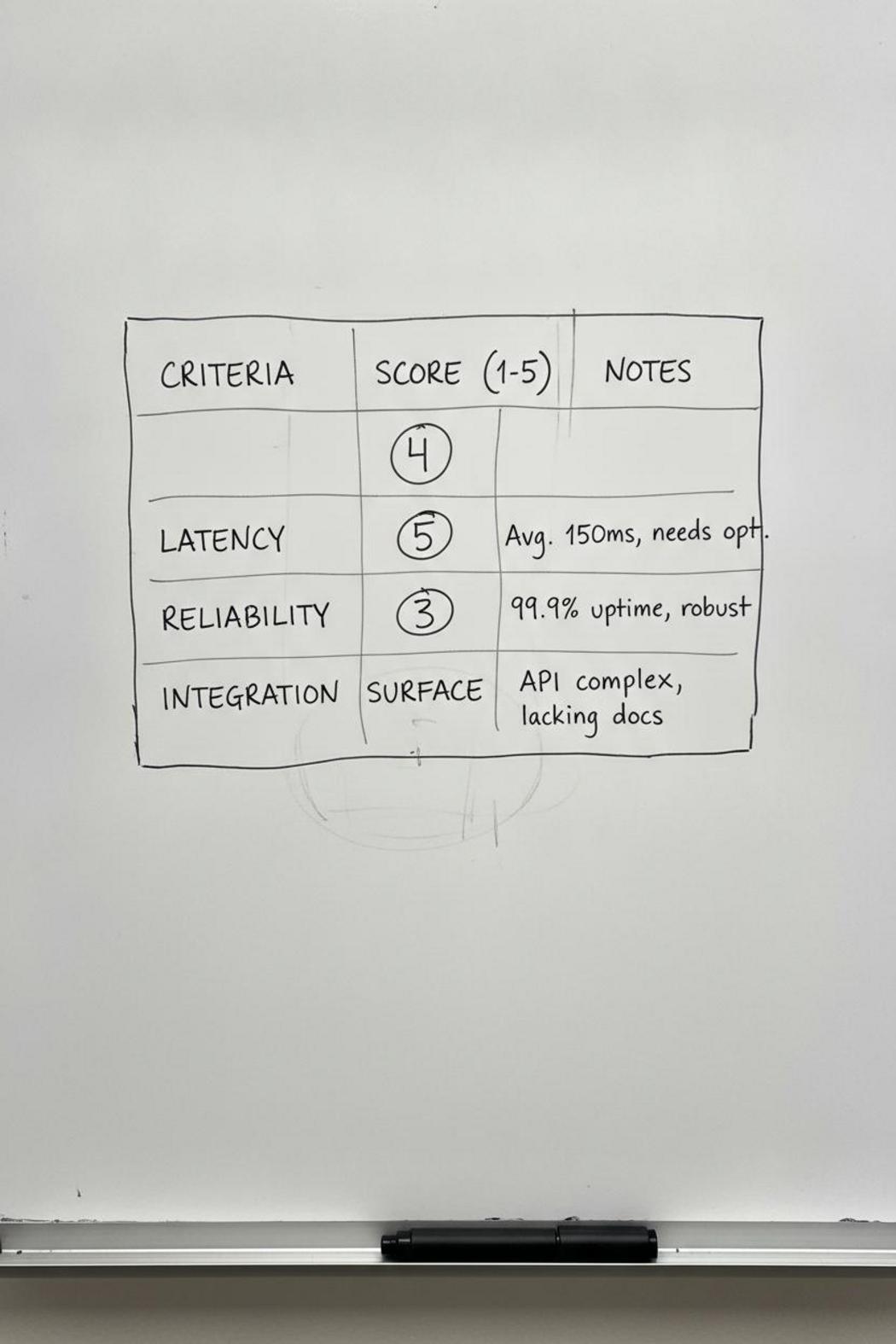
We evaluated each agentic tool against four criteria: documented benchmarks or evals, clarity of the agent loop design, integration surface area, and whether the release notes reflect genuine engineering decisions. What follows is a ranked list, built for practitioners who need to decide fast what deserves a proof-of-concept this sprint.
This Week’s Top-Ranked AI Agent Product

🔧 Related tools & reading:
🤖 Designing Large Language Model Applications — $54.44 at Walmart
🛠️ Build a Large Language Model (From Scratch) — $59.99 at Barnes & Noble
🦜 The Complete LangChain Handbook: Master Rag, Agents, Vector Search, and LLM Workflows to Create Advanced AI-Powered Applications — $17.99 at bookshop.org
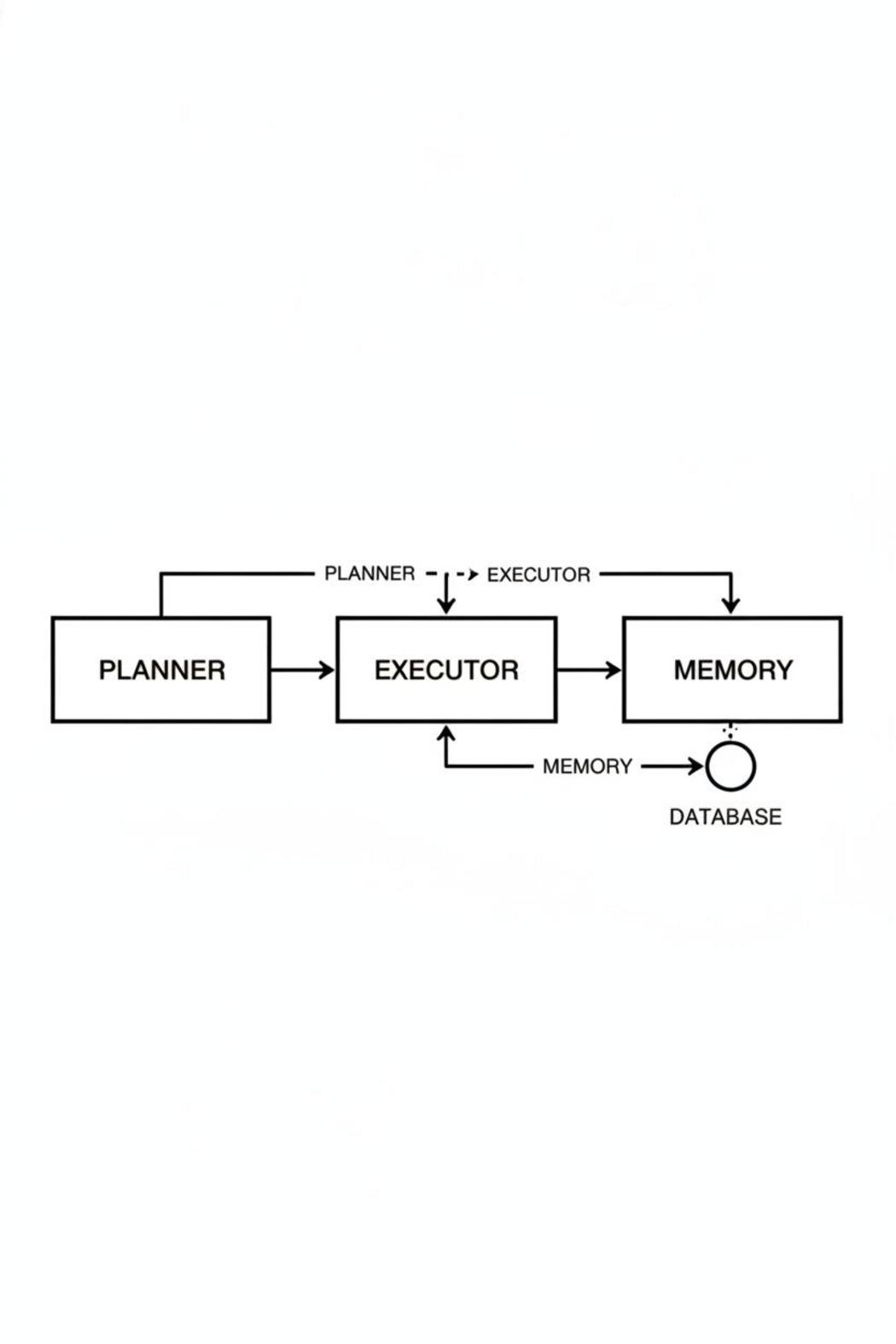
Of all the AI agent products released this week, the one that warrants the most serious attention is Salesforce’s Agentforce 3.0 update, which shipped quietly on Tuesday with a set of capability expansions that the company undersold in its own announcement. The headline feature — multi-agent orchestration across CRM workflows — has been promised before by various vendors, but the implementation here shows a level of execution maturity that separates it from the field. Specifically, the planner-executor architecture allows a coordinating agent to decompose a sales or service objective into sub-tasks, assign them to specialist agents with scoped tool access, and reconcile outputs without requiring human intervention at each handoff point. That is not a demo capability. It is production-ready and observable through the updated audit trail interface, which finally gives enterprise compliance teams something they can actually work with.
What makes this the top-ranked autonomous assistant launch of the week is not raw novelty but rather the coherence of the full stack. Salesforce has built the memory layer, the tooling integrations, and the guardrail logic as a unified system rather than bolting components together post-hoc. The result is that agent behavior degrades predictably under edge conditions instead of failing silently — a distinction that matters enormously to anyone who has actually tried to debug a multi-agent failure in a live environment. The context window management has also been rearchitected; rather than naively stuffing CRM history into a prompt, the retrieval layer selectively surfaces records based on task relevance, reducing both token overhead and hallucination surface area.
There are still meaningful gaps worth noting, because no agent release 2026 deserves a pass on honest scrutiny. Cross-org agent-to-agent communication remains locked within the Salesforce ecosystem, which limits the platform’s utility for companies running heterogeneous tool stacks. The natural language task specification interface also still requires well-formed input to perform reliably — it has low tolerance for ambiguous instructions, which means the cognitive burden hasn’t been fully transferred from the user to the agent. These are solvable engineering problems, not architectural dead ends, but they represent real constraints on the current deployment envelope.
Among the broader set of best AI agent products released this week, including updates from Workday, ServiceNow, and a handful of well-funded startups, Agentforce 3.0 stands out because it demonstrates the most credible path toward agents that handle consequential enterprise tasks without constant supervision. The agentic tools market is crowded with capability claims that dissolve on closer inspection. This one, on the technical evidence available, mostly holds together.
Runner-Up Agent Releases Worth Testing
🔧 Related tools & reading:
🤖 Designing Large Language Model Applications — $54.44 at Walmart
🛠️ Build a Large Language Model (From Scratch) — $59.99 at Barnes & Noble
🦜 The Complete LangChain Handbook: Master Rag, Agents, Vector Search, and LLM Workflows to Create Advanced AI-Powered Applications — $17.99 at bookshop.org
Not every agent release worth your attention lands at the top of the rankings. This week’s runner-up batch represents the kind of incremental but technically meaningful progress that often gets buried under splashier announcements — and if you’re evaluating the best AI agent products released this week, these deserve a closer look before you dismiss them as second tier.
Lindy’s updated workflow agent pushed a quiet but notable improvement to its inter-agent communication layer, allowing sub-agents to pass structured state objects rather than flat text summaries between handoff points. That single architectural choice closes a reliability gap that has plagued most multi-agent orchestration frameworks since their early releases — where context degradation across agent boundaries quietly corrupts task execution without any obvious failure signal. It’s not headline material, but it’s the kind of fix that separates tools that work in production from tools that work in demos.
On the autonomous assistant launch front, Beam AI released an enterprise-facing accounts payable agent that’s notable less for the task domain itself — AP automation is crowded — and more for its audit trail architecture. Every decision node in the agent’s execution graph is logged with the specific retrieval chunk and policy rule that influenced it, producing genuinely interpretable records rather than post-hoc explanations stitched together after the fact. Regulated industries have been waiting for exactly this kind of design discipline from the agent layer, and Beam is one of the first to ship it rather than promise it.
There’s also Relay.app’s updated browser-use integration, which added conditional branching logic directly into web-interaction steps — meaning the agent can now evaluate page state mid-task and adjust its path without routing back to a top-level planner. The practical effect is fewer redundant LLM calls and substantially faster task completion on multi-step web workflows. It’s a tight, well-scoped improvement that reflects a team thinking carefully about latency and cost rather than just capability surface area.
None of these rise to the top ranking this week because they’re either narrow in scope, early in real-world validation, or shipping against an already-competitive field. But as agentic tools mature, the signal increasingly lives in these architectural and operational details — not in the capability claims on a landing page. If you’re building evaluation pipelines or running internal pilots, all three are worth spinning up before the end of the month.
Notable Agentic Tools That Missed the Cut

🔧 Related tools & reading:
🤖 Designing Large Language Model Applications — $54.44 at Walmart
🛠️ Build a Large Language Model (From Scratch) — $59.99 at Barnes & Noble
🦜 The Complete LangChain Handbook: Master Rag, Agents, Vector Search, and LLM Workflows to Create Advanced AI-Powered Applications — $17.99 at bookshop.org
Not every agent release 2026 has brought merits strong enough to crack the main ranking, but a handful of tools that launched this week deserve acknowledgment for what they attempted, even where execution fell short. Anthropic’s expanded tool-use scaffolding for Claude, quietly pushed as part of a developer-facing update rather than a formal product launch, showed genuine architectural thought in how it handles multi-step task interruption and resumption. The state persistence model is cleaner than most competitors have managed. It didn’t make the ranked list simply because it ships as infrastructure rather than a discrete AI agent product that practitioners can evaluate end-to-end — the surface area is too partial to score fairly against complete deployments.
Adept’s updated workflow recorder also surfaced this week with modest fanfare. The premise remains compelling: capture human desktop behavior, convert it into replayable agentic sequences without requiring API integrations. In practice, the fragility problem that has plagued this category for two years hasn’t been resolved. Minor UI changes in target applications break recorded flows in ways the system neither detects nor handles gracefully. It’s a well-resourced team working on a genuinely hard problem, and the improvement in element localization over prior versions is measurable — but “improved” and “production-ready” are different claims, and conflating them would be doing readers a disservice.
A stealth-ish autonomous assistant launch from a YC-backed startup called Meridian drew attention in agentic AI circles mid-week. Their pitch centers on financial operations agents that can execute multi-system reconciliation tasks with a human-in-the-loop confirmation layer. The architecture documentation they released is more rigorous than most at this stage, and the tool-call transparency they’ve built into the approval interface is exactly the kind of design thinking the space needs more of. What’s missing is any credible evidence of performance at scale — the demo environments are controlled, the case studies are thin, and the reliability claims outpace the data behind them. Worth watching as a team to follow, not yet worth ranking among the best AI agent products released this week.
Finally, Microsoft’s incremental Copilot Studio update deserves a brief mention, less for what it added than for what it signals. The new declarative agent configuration options reduce the barrier to standing up narrow task agents within M365 environments considerably. For enterprise practitioners, that’s not nothing. But the evaluation problem persists: agentic tools embedded inside platform ecosystems resist independent benchmarking, and without reproducible performance data outside Microsoft-controlled conditions, editorial rigor demands restraint. The update is real, the use case is real, the omission from the ranked section is also real.
How We Rank AI Agent Product Launches Each Week
🔧 Related tools & reading:
🤖 Designing Large Language Model Applications — $54.44 at Walmart
🛠️ Build a Large Language Model (From Scratch) — $59.99 at Barnes & Noble
🦜 The Complete LangChain Handbook: Master Rag, Agents, Vector Search, and LLM Workflows to Create Advanced AI-Powered Applications — $17.99 at bookshop.org
Every week, a new wave of autonomous assistant launches hits the market — some genuinely advancing what agents can do, others repackaging existing orchestration patterns behind a polished demo. Separating the two requires more than reading a press release. Our methodology is built around what we consider the four load-bearing questions for any agent release in 2026: What does it actually do without human intervention? How does it handle failure? What does the memory and context architecture look like under the hood? And is there reproducible evidence that it works at the task complexity it claims?
We weight autonomous capability above surface-level feature count. An agentic tool that reliably completes a narrow, well-scoped task through genuine multi-step reasoning scores higher than a broadly marketed “agent” that is, on inspection, a retrieval-augmented chatbot with a task pane bolted on. The industry has a persistent habit of labeling anything with tool-use as an agent, so we apply a stricter threshold: the system must demonstrate goal-directed behavior across at least two decision points without requiring user re-prompting to continue.
Evaluation depth varies depending on what the team releases alongside the product. When an SDK, technical whitepaper, or architecture diagram is publicly available, we go into the implementation details — how the planner is structured, whether the agent uses a persistent memory store or reconstructs context from scratch each session, and how tool-calling is handled under ambiguous inputs. When only a demo video and a pricing page exist, we note that explicitly. Opacity is itself a data point, and readers deserve to know the difference between a launch backed by reproducible testing and one that amounts to a controlled walkthrough.
Ranking the best AI agent products released this week is not about awarding novelty for its own sake. A well-executed narrow agent that handles document processing with verifiable accuracy ranks ahead of a sprawling general-purpose assistant that hallucinates tool calls under mild pressure. We also track continuity — if a product we covered in a prior week ships a meaningful capability update, that reentry gets evaluated against what changed, not just what was always there. Version numbers matter. Changelog transparency matters. A team that ships incremental, well-documented improvements is telling you something meaningful about their engineering culture, and that signal factors into how seriously we take their claims going forward.
Finally, we do not accept vendor briefings as primary evidence. Demonstrations prepared under ideal conditions, with curated inputs and no adversarial edge cases, tell you what the product can do when nothing goes wrong. That is a narrow and often misleading slice of real-world utility. Where possible, we test independently using standardized task environments, and where we cannot, we say so. The goal is to give technically literate readers a reliable basis for evaluating each autonomous assistant launch on its actual engineering merit — not its marketing velocity.
Conclusion
The agent release landscape in 2026 is maturing fast, but most launches still trade architectural honesty for launch-day buzz. When evaluating the best AI agent products released this week, the signal worth tracking is rarely the headline capability — it is memory persistence, tool-call reliability, and failure-mode transparency. The ranked products above reflect that lens. Expect architectural differentiation to sharpen over the coming quarters as infrastructure costs drop and benchmarks grow harder to game. Bookmark this page; we update rankings weekly as new data emerges.
Questions or something we should be covering? Reach out via the Contact page. ⚡