This ai agent function calling tutorial python walks you through wiring a language model to real executable tools — the foundational pattern behind every production AI agent. Function calling, as exposed by the OpenAI API and compatible runtimes, lets the model emit a structured JSON payload that your application code intercepts, executes, and feeds back into the conversation loop.
Unlike prompt chaining or raw text parsing, tool use via function calling gives you a deterministic contract between the LLM and your Python runtime: the model declares intent, you validate and dispatch, and the result re-enters the context window. This tutorial covers defining tool schemas, handling the multi-turn conversation state, dispatching to real Python functions, and returning structured outputs — with working code you can run locally against the OpenAI API or any compatible endpoint.
How LLM Tool Use and Function Calling Actually Work

🔧 Related tools & reading:
🤖 Building LLM Applications — $49.99 at World of Books
🧠 Building Agent-Powered Applications : Your guide to generative AI, RAG, fine-tuning, and orchestration for production use — $39.99 at eBooks.com
🔧 Mastering LLM Tool Calling: Build ActionDriven AI Systems with Function Calling, Agents, and RealWorld Integrations by Hooper, Andrew by Independently — $23.00 at Walmart
Before writing a single line of code in any ai agent function calling tutorial python developers will find, it’s worth being precise about what’s actually happening under the hood — because the abstraction is leaky in ways that matter. Large language models are, fundamentally, next-token predictors. They don’t execute code, query databases, or call APIs. What they do is generate text that *describes* a function invocation in a structured format, and the surrounding infrastructure is responsible for actually running it. That distinction isn’t pedantic; it’s the source of most bugs and failure modes you’ll encounter when building real agents.
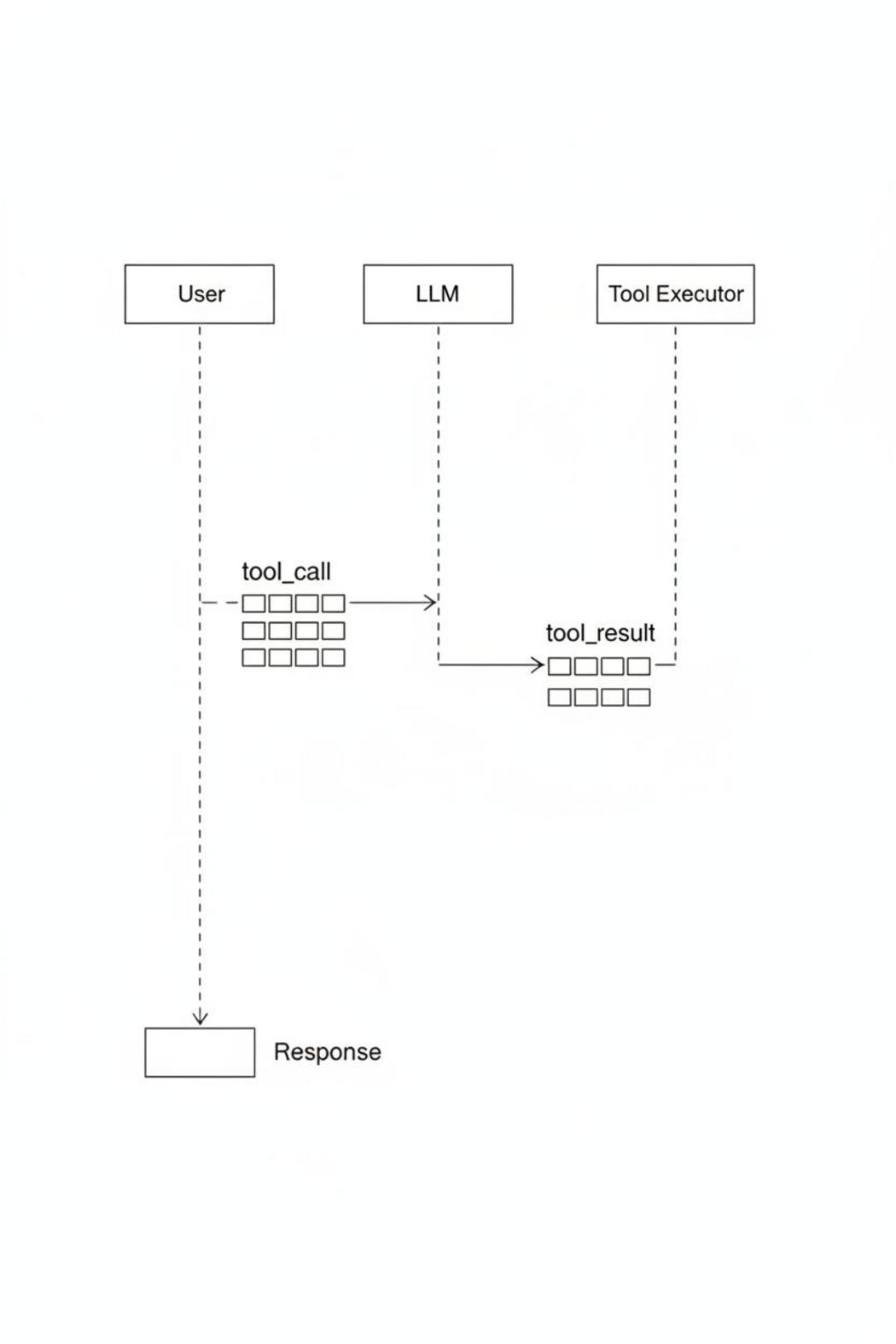
The mechanics work roughly like this: you define a set of available tools — typically as JSON Schema objects — and pass them to the model alongside your prompt. The model’s output, rather than being pure natural language, may include a structured payload indicating which function it wants to call and with what arguments. With OpenAI function calling, for instance, the model returns a message with a tool_calls field containing a function name and a JSON argument string. Critically, the model is not calling anything. It is producing a structured output that your application code must parse, validate, route to the actual function, and then return the result back to the model in a follow-up message.
This conversational loop — prompt, tool call request, execution, result injection, continuation — is the core pattern of tool use in LLMs, and understanding it as a multi-turn conversation rather than a single inference call changes how you reason about latency, error handling, and cost. Each round trip to the model is a separate API call with its own token consumption. A chain of five tool calls isn’t one request; it’s potentially five or more, each carrying the full accumulated context of the conversation. Structured outputs help here by reducing parsing failures and retry overhead, but they don’t eliminate the fundamental sequential cost.
There’s also the question of how models decide *when* to call a tool versus responding directly. This is a learned behavior shaped by instruction tuning and RLHF, not a deterministic rule engine. Models can and do hallucinate function arguments, call tools unnecessarily, or fail to call them when they should. Schema design — how you name functions, describe parameters, and set required versus optional fields — has a measurable effect on call accuracy. A python ai agent that performs reliably in production is one where the developer has invested in tight, unambiguous tool definitions, not just correct downstream execution logic. The model’s behavior is part of your system, and it needs to be treated as such: tested, observed, and tuned over time.
Defining Tool Schemas and Registering Functions in Python
🔧 Related tools & reading:
🤖 Building LLM Applications — $49.99 at World of Books
🧠 Building Agent-Powered Applications : Your guide to generative AI, RAG, fine-tuning, and orchestration for production use — $39.99 at eBooks.com
🔧 Mastering LLM Tool Calling: Build ActionDriven AI Systems with Function Calling, Agents, and RealWorld Integrations by Hooper, Andrew by Independently — $23.00 at Walmart
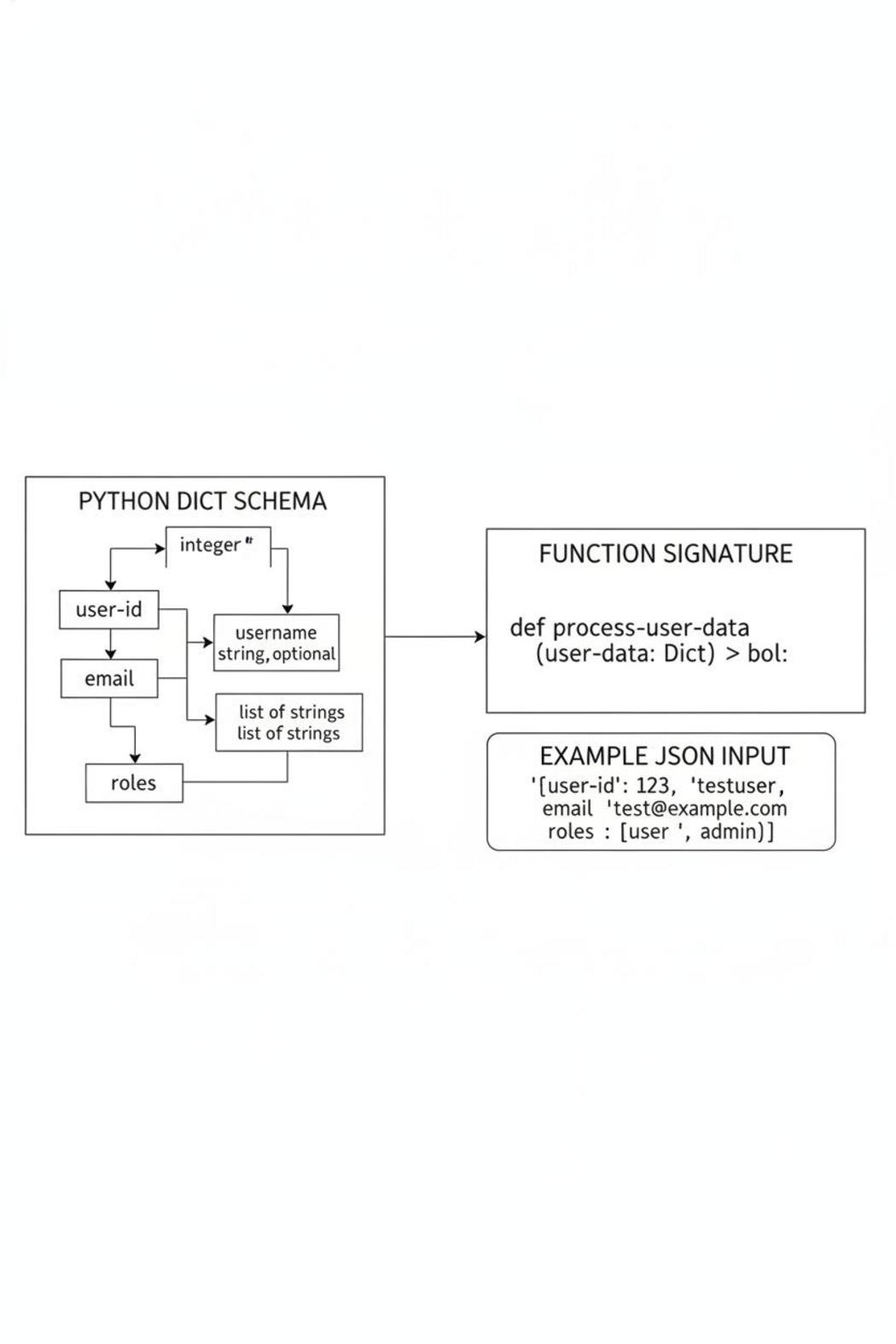
Before an agent can call anything, it needs a contract — a machine-readable description of what each tool does, what arguments it accepts, and what types those arguments carry. In the OpenAI function calling interface, this contract takes the form of a JSON Schema object passed alongside your messages. Getting this schema right is where most tutorial examples cut corners, and where real implementations quietly break. The schema isn’t just documentation; the model uses it to decide whether to invoke a function at all, and to construct the argument payload it hands back to your code. Sloppy schemas produce hallucinated arguments, missed invocations, and type coercion bugs that only surface at runtime.
In Python, the cleanest approach is to define your tool schemas as plain dictionaries or Pydantic models and register them in a central function map the agent runtime can dispatch against. A minimal schema for a weather lookup tool, for instance, declares a name, a description precise enough that the model understands the tool’s scope, and a parameters block following JSON Schema draft-07 conventions — with type, properties, and a required array. The description is doing real work here: vague language like “gets information” degrades tool selection accuracy measurably. In any serious python ai agent, the description should read like a function docstring written by someone who cares about correctness.
Registration is straightforward once you’ve settled on a schema pattern. A dictionary keyed by function name, mapping each name to its callable, is all the dispatcher needs. When the model returns a tool_calls object in its response, your code extracts the function name and argument string, deserializes the JSON arguments, looks up the callable in your registry, and executes it. The result then gets appended to the message history as a tool-role message before the next inference call. This loop — infer, dispatch, observe, infer again — is the core execution model for this openai function calling pattern, and Python’s dynamic nature makes wiring it up concise without obscuring what’s actually happening.
One detail that trips up developers working through an ai agent function calling tutorial python implementation for the first time is argument validation. The model doesn’t guarantee it will populate every field, even required ones, and it occasionally produces arguments that fail type constraints. Wrapping each dispatch call in a validation layer — Pydantic’s model_validate or a simple jsonschema.validate call — catches these failures before they propagate into tool logic that assumes clean inputs. Treating the model’s structured output as untrusted external input, rather than trusted internal data, is the right mental model. It also makes your tool layer easier to test in isolation, since the validation boundary gives you a clean seam to inject malformed inputs and verify graceful failure. Getting this plumbing right before building higher-level orchestration logic saves significant debugging time downstream.
Building the Agent Loop: Dispatch, Execute, and Return Results

🔧 Related tools & reading:
🤖 Building LLM Applications — $49.99 at World of Books
🧠 Building Agent-Powered Applications : Your guide to generative AI, RAG, fine-tuning, and orchestration for production use — $39.99 at eBooks.com
🔧 Mastering LLM Tool Calling: Build ActionDriven AI Systems with Function Calling, Agents, and RealWorld Integrations by Hooper, Andrew by Independently — $23.00 at Walmart
With your tools defined and your schema registered, the next step in any serious ai agent function calling tutorial python implementation is building the loop that actually drives behavior — the dispatch-execute-return cycle that separates a stateless prompt from a functioning agent. This loop is where the model’s intent becomes real action, and where most implementations either hold together or quietly fall apart.
The pattern itself is straightforward. You send a message to the model — OpenAI’s API being the most common surface here — and inspect the response for tool call objects rather than a plain text completion. When the model emits a tool_calls field, your code is responsible for routing each call to the correct Python function, executing it, capturing the return value, and feeding that result back into the conversation as a tool role message. The loop then runs again. This continues until the model produces a response with no pending tool calls, at which point you surface the final answer. The elegance of this architecture is that the model itself decides when it has enough information — your loop doesn’t need to know when to stop, only how to keep going.
In practice, handling multiple tool calls in a single response turn is where developers often stumble. OpenAI function calling can return a list of tool_calls, each with its own unique id, function name, and JSON-encoded arguments. You need to iterate over all of them, match each by its id when constructing the result messages, and preserve the full conversation history across iterations. Losing message history mid-loop is a subtle bug that produces confusing model behavior — the model appears to forget its own reasoning, because structurally, it has. Using a dedicated conversation state object rather than appending to a bare list makes this significantly more manageable as tool chains grow in complexity.
Argument parsing deserves explicit attention here. The model emits function arguments as a JSON string, not a Python dict, and you need to deserialize them reliably before dispatch. This is where structured outputs provide a meaningful upgrade over unconstrained generation — by enforcing a JSON schema at the model level, you eliminate an entire class of malformed-argument failures that otherwise surface at runtime. Without schema enforcement, defensive parsing with try-except blocks around every tool invocation isn’t paranoia; it’s standard practice in any production-grade python ai agent implementation.
Error handling within the loop also shapes agent reliability more than most tutorials acknowledge. If a tool raises an exception, returning a structured error message back into the conversation — rather than crashing the loop — gives the model an opportunity to recover, retry with different arguments, or escalate gracefully. Whether the model actually does recover depends on how well your system prompt frames tool failure, but the architectural affordance needs to be there. The loop is not just a dispatcher; it’s the nervous system of the agent, and its robustness sets the ceiling on everything built on top of it.
Structured Outputs, Error Handling, and Production Patterns
🔧 Related tools & reading:
🤖 Building LLM Applications — $49.99 at World of Books
🧠 Building Agent-Powered Applications : Your guide to generative AI, RAG, fine-tuning, and orchestration for production use — $39.99 at eBooks.com
🔧 Mastering LLM Tool Calling: Build ActionDriven AI Systems with Function Calling, Agents, and RealWorld Integrations by Hooper, Andrew by Independently — $23.00 at Walmart
Once your basic tool dispatch loop is working, the next failure point in any ai agent function calling tutorial python developers follow is usually not the happy path — it’s everything else. Real production traffic surfaces malformed JSON from the model, schema mismatches between what you defined and what gets returned, and tool executions that throw exceptions mid-chain. Handling these gracefully is what separates a demo from a system you’d trust in production.
OpenAI’s structured outputs mode, introduced alongside stricter JSON schema enforcement, gives you a meaningful reliability improvement over the older function calling spec. When you set strict: true on your tool definitions, the model is constrained to only emit valid JSON matching your schema — no extra keys, no missing required fields. In practice this means you can deserialize the response directly into a Pydantic model without a try/except around every parse call. That said, strict mode has coverage limits: it doesn’t handle recursive schemas well, and deeply nested unions can silently fall back to non-strict behavior depending on the model version. Validate your schemas against the OpenAI spec before assuming coverage.
Error handling in the tool use loop deserves its own design pass. When a tool call raises an exception, you have two reasonable choices: surface a structured error string back into the conversation so the model can reason about it and retry with corrected arguments, or abort the chain and escalate. The right choice depends on whether the failure is recoverable by the model — a wrong argument type usually is, a downstream API being unavailable usually isn’t. Returning raw Python tracebacks into the context window is almost always wrong; they’re noisy, leak internal details, and rarely help the model course-correct. A terse, typed error message — {"error": "invalid_date_range", "detail": "start must precede end"} — gives the model signal without the noise.
For production patterns in a python ai agent, the two most important additions are idempotency keys on tool calls and a maximum iteration ceiling on your agent loop. Without the latter, a model that gets confused can spin indefinitely, burning tokens and potentially triggering downstream side effects repeatedly. A hard cap of eight to twelve iterations, combined with logging at each step, gives you observability and a safety boundary. Idempotency matters most for tools with side effects — sending emails, writing to databases, calling payment APIs — where re-execution on a retry could cause real damage. Threading a UUID through each tool invocation and deduplicating on the receiving end is unglamorous work, but it’s the kind of engineering that makes the difference when a network hiccup causes your agent to retry.
Schema versioning is the last pattern worth establishing early. Tool definitions embedded directly in your prompt construction code are easy to change, which means they’re easy to change accidentally. Treating your tool schemas as versioned artifacts — stored separately, referenced by version string, logged alongside each agent run — lets you correlate behavioral regressions with specific definition changes. This is the kind of operational discipline that the openai function calling documentation doesn’t cover, but that any team running agents at scale will eventually build out of necessity.
Conclusion
Function calling is not a convenience feature — it is the lowest-level primitive from which reliable, auditable AI agents are built. By structuring tool definitions precisely, validating schemas rigorously, and handling execution errors explicitly, you transform unpredictable language model output into deterministic, inspectable system behavior. The Python patterns covered in this ai agent function calling tutorial python walkthrough — from schema design to multi-step orchestration — give you a production-ready foundation rather than a prototype. Master this layer first; everything else in agentic architecture builds on top of it.
Questions or something we should be covering? Reach out via the Contact page. ⚡