Choosing between AutoGPT vs CrewAI autonomous agents is not a branding decision — it is an architectural one that shapes how your system plans tasks, manages state, and recovers from failure.
AutoGPT pioneered the single-agent loop model, where one LLM-backed process recursively decomposes goals, calls tools, and evaluates its own output. CrewAI takes a different stance, structuring work as a coordinated team of role-defined agents that pass context through a shared task graph.
Both frameworks have matured significantly since their initial releases, but they optimize for different failure modes and different team workflows. This comparison cuts through the surface-level feature lists to examine how each framework handles the agent loop, tool integration, memory management, and the practical overhead of running self-directed AI in a production environment where reliability matters more than demo impressiveness.
Agent Architecture: Single-Loop vs Multi-Role Orchestration

🔧 Related tools & reading:
📖 Designing Large Language Model Applications — $54.44 at Walmart
🏢 LLMs in Enterprise: Design strategies, patterns, and best practices for large language model development — $43.99 at VitalSource
🤖 LLM Application Design patterns : A developer’s guide to building with generative AI — $25.00 at Walmart
The architectural gap between AutoGPT and CrewAI is not superficial — it reflects fundamentally different assumptions about how autonomous agents should reason and act. AutoGPT operates on a single-agent loop model, where one LLM-backed process cycles through a plan-act-observe sequence repeatedly until it reaches a terminal condition or runs out of context. The agent generates its own next actions, critiques its outputs, and steers itself forward with minimal external coordination. That tight loop is elegant in theory, but in practice it accumulates errors across iterations, struggles with long-horizon tasks, and has a well-documented tendency to hallucinate plausible-sounding subtasks that lead it further from the original objective.
CrewAI takes a structurally different position. Rather than concentrating all reasoning in a single agent loop, it distributes responsibility across a defined set of role-specialized agents — a researcher, a writer, an analyst, or whatever roles the developer configures — coordinated by an orchestration layer that manages task sequencing and inter-agent communication. This multi-role design means that when evaluating autogpt vs crewai autonomous agents, you are not simply comparing two implementations of the same idea. You are comparing a monolithic cognitive loop against a compositional system where each agent has constrained scope, which tends to produce more predictable intermediate outputs.
The implications for task planning are significant. AutoGPT’s self-directed AI approach places the full burden of decomposing ambiguous goals onto a single model with no structural accountability for subtask quality. CrewAI externalizes that decomposition into the crew definition itself — the developer encodes task structure at configuration time, and agents execute within those lanes. This shifts some cognitive load back to the developer, but it also makes failure modes more diagnosable. When a CrewAI pipeline breaks, you can usually trace the fault to a specific agent and role. When an AutoGPT run derails, the failure is often entangled across multiple loop iterations and harder to isolate.
Neither architecture is universally superior. AutoGPT’s single-loop model has genuine advantages for open-ended exploratory tasks where the solution space is poorly defined upfront. Its ability to reformulate goals mid-run without external prompting can be valuable precisely because no one has pre-specified the right crew composition. CrewAI, by contrast, rewards situations where the problem structure is known in advance and consistent output quality across subtasks matters more than flexibility. Understanding this tradeoff at the architectural level — rather than at the feature-comparison level — is what separates a grounded evaluation from a marketing exercise.
Task Planning and Goal Decomposition Under the Hood
🔧 Related tools & reading:
📖 Designing Large Language Model Applications — $54.44 at Walmart
🏢 LLMs in Enterprise: Design strategies, patterns, and best practices for large language model development — $43.99 at VitalSource
🤖 LLM Application Design patterns : A developer’s guide to building with generative AI — $25.00 at Walmart
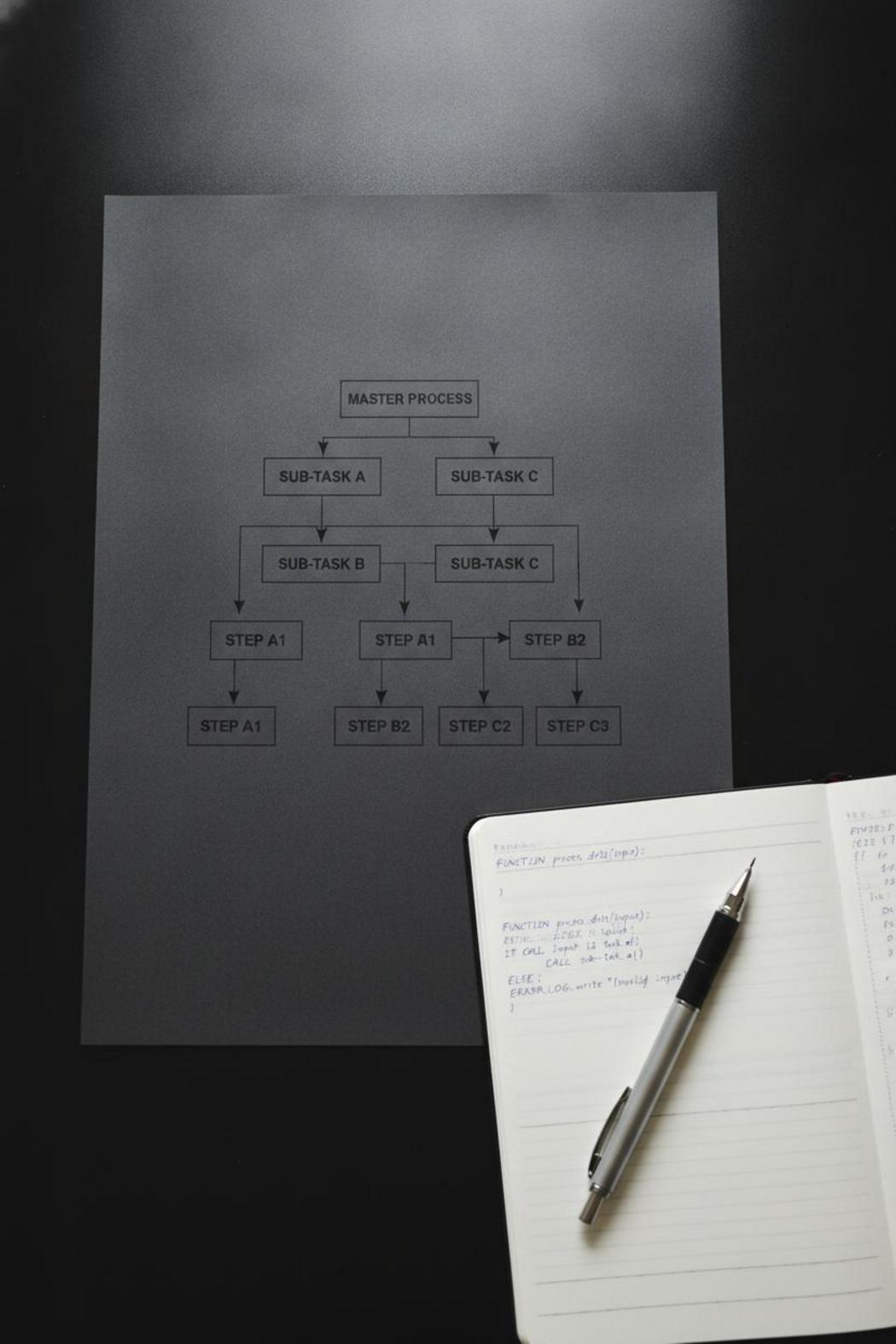
When you start pulling apart how AutoGPT and CrewAI actually handle task planning, the architectural differences become stark — and they matter more than any feature comparison chart will tell you. AutoGPT operates on a single-agent loop model, where one autonomous agent iteratively decomposes a high-level goal into sub-tasks, executes them sequentially, reflects on outputs, and decides what to do next. The loop is self-directed in a fairly literal sense: the agent writes its own task queue, updates it based on results, and keeps cycling until it determines the goal is met or it hits a defined limit. This design makes AutoGPT a genuinely self-directed AI in architecture, not just in marketing language, but it also means the planning and execution responsibilities are collapsed into a single context window and a single reasoning thread.
CrewAI takes a structurally different approach to the same problem. Rather than a monolithic agent loop, it distributes goal decomposition across a defined crew of specialized agents, each assigned a role, a goal, and a set of tools. Planning in CrewAI is more explicit and more social in the computational sense — a manager agent (when using hierarchical process mode) orchestrates task sequencing and delegates to worker agents based on role definitions. This means the cognitive load of planning is spread across the system rather than concentrated in one prompt chain. The tradeoff is that the task decomposition logic is largely predetermined by how the developer structures the crew, rather than emergent from the agent’s own reasoning at runtime.
In practical terms, AutoGPT’s approach introduces more variance. The agent can surprise you with creative decomposition strategies, but it can also wander, loop unproductively, or make brittle planning decisions when the goal is ambiguous. This is the known failure mode of any autonomous agent architecture that relies heavily on LLM self-direction without hard scaffolding. CrewAI’s model is more deterministic and therefore more debuggable — you can trace why a task was routed to a specific agent and at what point in the workflow a failure occurred. That explainability gap is often underestimated when teams are evaluating autogpt vs crewai autonomous agents for production deployment rather than research prototyping.
Neither model is universally superior. AutoGPT’s loose planning structure suits exploratory tasks where the full solution path genuinely cannot be defined upfront. CrewAI’s structured delegation suits complex workflows where roles are well-understood and repeatability matters. What the comparison actually reveals is a deeper architectural tension in agentic AI design: how much planning authority should live inside the model versus outside it, in the scaffolding the developer controls. That question doesn’t have a clean answer yet, and anyone telling you otherwise is selling something.
Tool Integration, Memory, and State Management
🔧 Related tools & reading:
📖 Designing Large Language Model Applications — $54.44 at Walmart
🏢 LLMs in Enterprise: Design strategies, patterns, and best practices for large language model development — $43.99 at VitalSource
🤖 LLM Application Design patterns : A developer’s guide to building with generative AI — $25.00 at Walmart
When evaluating AutoGPT vs CrewAI as autonomous agents, the differences in tool integration philosophy become immediately apparent and have real consequences for what each system can reliably accomplish. AutoGPT treats tool access as a core primitive of the agent loop itself — web search, file I/O, code execution, and API calls are baked into the runtime and invoked dynamically as the agent reasons through a task. This tightly coupled design means the agent can reach for a tool mid-plan without an explicit handoff, but it also means debugging tool failures requires stepping into the internals of an opaque execution trace. The integration surface is broad but not always clean.
CrewAI takes a more structured approach, where tools are assigned to agents at instantiation and scoped to their designated roles. A researcher agent gets search and scraping tools; a writer agent gets document tools. This design reflects a deliberate opinion: constraining tool access per role reduces emergent misbehavior and makes the system easier to reason about during development. The tradeoff is reduced flexibility — an agent cannot opportunistically reach for a tool outside its assigned scope, which occasionally forces awkward role decomposition to handle tasks that don’t fit neatly into the predefined crew structure.
Memory architecture is where both frameworks reveal their maturity limits most clearly. AutoGPT introduced the concept of persistent memory early on, with vector store integration allowing the self-directed AI to retrieve prior context across sessions. In practice, retrieval quality varies significantly with embedding strategy and chunk size, and there is no principled mechanism for memory consolidation — old, irrelevant entries accumulate and can actively degrade task planning quality over time. CrewAI delegates memory concerns largely to the developer, providing hooks for context passing between agents but offering no built-in long-term memory store out of the box in its stable release.
State management across multi-step task execution is arguably the harder problem, and neither framework has fully solved it. AutoGPT’s agent loop maintains a working scratchpad that evolves as the agent reasons, but state is not formally typed or validated — the agent can contradict itself across iterations with no built-in consistency check. CrewAI’s sequential and hierarchical process modes impose more structure on how state flows between agents, and the explicit task output chaining gives developers a clearer model of what information is available at each stage. This makes CrewAI pipelines easier to test and instrument, even if they sacrifice the looser adaptability that AutoGPT’s more freeform execution sometimes enables. For production workloads where observability matters, that tradeoff tends to favor CrewAI — though neither system should be mistaken for production-hardened without significant additional engineering around state validation and failure recovery.
Production Readiness: Reliability, Cost, and When to Use Each

🔧 Related tools & reading:
📖 Designing Large Language Model Applications — $54.44 at Walmart
🏢 LLMs in Enterprise: Design strategies, patterns, and best practices for large language model development — $43.99 at VitalSource
🤖 LLM Application Design patterns : A developer’s guide to building with generative AI — $25.00 at Walmart
When evaluating AutoGPT vs CrewAI as autonomous agents for anything beyond a proof of concept, the gap between demo performance and production reliability becomes the central question. AutoGPT’s recursive agent loop — where a single agent continuously re-prompts itself to decompose and execute tasks — tends to accumulate errors across iterations. Each step introduces the possibility of model drift, hallucinated tool calls, or misinterpreted intermediate outputs. In long-horizon tasks, this compounding effect is not a minor inconvenience; it’s a structural fragility. Without hard guardrails and aggressive token budgeting, a poorly scoped AutoGPT run can consume hundreds of thousands of tokens while producing work that requires complete human re-evaluation. Cost exposure at the agent loop level is real and difficult to predict.
CrewAI takes a more composable approach. By distributing task execution across purpose-defined agents with explicit roles, it constrains the blast radius of any single agent’s failure. A research agent that returns poor output contaminates only its downstream consumers, not the entire task graph. This isn’t a silver bullet — inter-agent communication overhead adds latency, and poorly designed crew configurations can introduce circular dependencies or redundant LLM calls — but the failure modes are generally more legible and recoverable. For teams running structured workflows where task planning can be formalized into discrete handoffs, CrewAI’s architecture maps more predictably onto real operational requirements.
From a cost standpoint, neither framework is cheap to run at scale. Both are token-hungry by design, and production deployments need to treat LLM API spend as a first-class infrastructure concern, not an afterthought. That said, CrewAI’s bounded agent scopes make per-task cost modeling more tractable. You can benchmark individual agents, set output length contracts, and inject cheaper models for lower-stakes subtasks. AutoGPT’s open-ended self-directed AI loop resists this kind of granular cost isolation because the number of inference calls is determined dynamically at runtime.
The honest recommendation, then, is contextual. AutoGPT remains more appropriate for exploratory, single-user research tasks where you want a system to range freely across a problem and you’re willing to supervise the output critically. It is not a fit for multi-stakeholder workflows, compliance-sensitive processes, or anything requiring auditability. CrewAI is the more defensible choice for teams building repeatable internal tooling or customer-facing automation where task scope can be defined in advance and agent behavior needs to stay within predictable bounds. Neither framework has fully solved the reliability challenge inherent to autonomous agent design — but CrewAI at least gives engineering teams the structural leverage to manage it.
Conclusion
The right choice between AutoGPT and CrewAI ultimately comes down to whether your workload benefits more from a tightly controlled single agent loop or from the fault-isolation that dedicated role agents provide. AutoGPT suits exploratory, open-ended tasks where a unified context window matters, while CrewAI shines in structured pipelines where discrete responsibilities reduce error propagation. Benchmark your specific workload against latency, token cost, and failure recovery before committing. In the AutoGPT vs CrewAI autonomous agents debate, architecture alignment with your use case will always outperform raw capability.
Questions or something we should be covering? Reach out via the Contact page. ⚡