The autonomous AI assistant vs copilot comparison is no longer academic — it determines how you architect loops, handle errors, and define human-in-the-loop checkpoints in production systems. Copilots augment a human operator who retains decision authority at each step, while autonomous assistants execute multi-step workflows with minimal intervention, relying on internal planning and tool-use to reach a goal state.
For builders, this distinction has direct consequences: memory architecture, permission scoping, retry logic, and observability requirements differ substantially between the two models. Shipping the wrong pattern for your use case means either over-engineering a simple autocomplete feature or under-engineering a system that takes real-world actions with irreversible side effects.
This piece breaks down the technical boundaries between the two paradigms, examines where they converge in current agent frameworks, and gives concrete guidance on choosing the right model for your next product launch.
Defining the Control Loop: Where Copilot Ends and Autonomy Begins

🔧 Related tools & reading:
📘 Designing Machine Learning Systems: an Iterative Process for Production-Ready Applications — $5.00 at Ebokify
🎧 Designing Machine Learning Systems – Audiobook, by Chip Huyen — $13.00 at Audiobooks.com
🤖 Machine Learning System Design — $58.99 at Barnes & Noble
The distinction between a copilot and an autonomous AI assistant is not a marketing question — it’s an architectural one, and it lives in the control loop. A copilot, by design, keeps a human in the critical path of every consequential action. It drafts, suggests, retrieves, and summarizes, but the effector — the thing that actually changes state in the world — is always the human. The model produces an output; the human decides whether that output becomes an action. This is not a limitation so much as a deliberate constraint on where agency is permitted to terminate.
Autonomy shifts that boundary. In an agentic workflow, the model doesn’t just recommend the next step — it executes it, observes the result, and decides what comes next, often across multiple tool calls and environment interactions before a human ever reviews anything. The control loop is closed by the agent, not by the user. This architectural difference has profound downstream consequences for error propagation, auditability, and trust calibration. A mistake in a copilot interaction is caught before it affects external state. A mistake in an autonomous assistant’s execution chain may not surface until it has already touched a database, sent a message, or triggered a downstream process.
This is why the autonomous AI assistant vs copilot comparison can’t be reduced to a feature checklist. The meaningful differentiator isn’t the presence of tool use or memory or multi-step reasoning — copilots can have all of those. What separates them is whether the system can initiate consequential actions without a synchronous human approval step. Some products blur this line intentionally, offering configurable autonomy levels or requiring human confirmation only above certain risk thresholds. That’s a reasonable design pattern, but it demands that builders be explicit about where those thresholds sit and what “risk” is actually being measured.
For teams evaluating or building in this space, the practical question is: at what point in the execution graph does human judgment enter, and is that point calibrated to the actual cost of a wrong action? An agent product launch that papers over this question with phrases like “AI-powered” or “intelligent automation” should raise immediate skepticism. The control loop topology is the product. Everything else — the model, the interface, the integrations — is scaffolding around a core decision about where human oversight lives in the system. Getting that decision right, and being transparent about it, is what separates serious agentic infrastructure from demos that don’t survive contact with production environments.
Architecture Trade-offs: Memory, Permissions, and Tool Access
🔧 Related tools & reading:
📘 Designing Machine Learning Systems: an Iterative Process for Production-Ready Applications — $5.00 at Ebokify
🎧 Designing Machine Learning Systems – Audiobook, by Chip Huyen — $13.00 at Audiobooks.com
🤖 Machine Learning System Design — $58.99 at Barnes & Noble
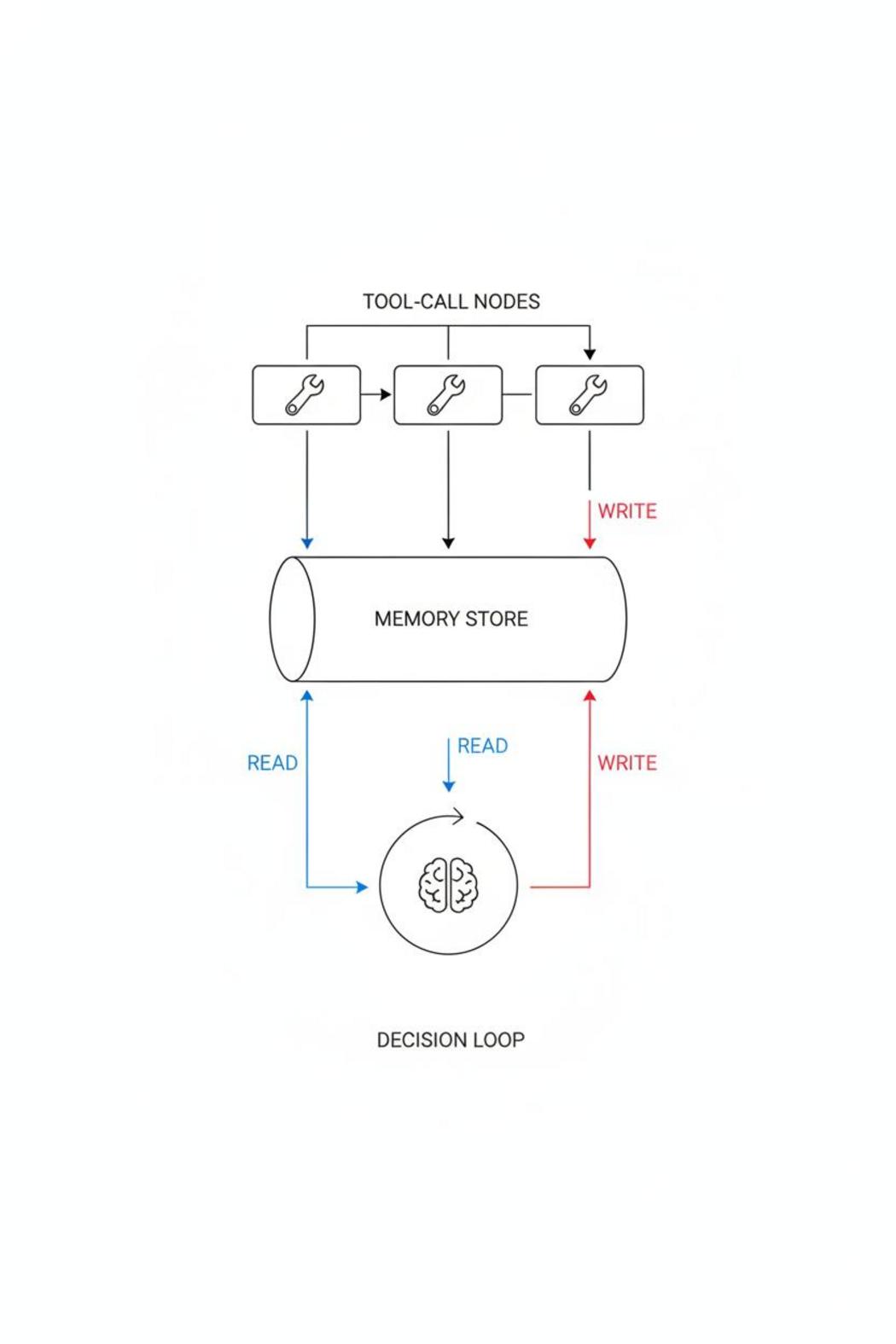
The architectural decisions that separate an autonomous AI assistant from a copilot run deeper than product positioning. At the memory layer, copilots typically operate within a bounded context window tied to a single session or conversation thread. The user provides input, the model responds, and state is largely ephemeral unless the application explicitly persists it. Autonomous assistants, by contrast, require durable memory architectures — episodic stores for past task outcomes, semantic indexes for retrieved knowledge, and working memory that can span multi-step execution chains that may run for minutes or hours without human prompting. Getting this wrong means agents that repeat mistakes, lose task context mid-execution, or hallucinate state they should have retrieved.
Permissions modeling is where most agent product launches quietly stumble. Copilots are relatively safe to deploy with broad read access because a human is reviewing every output before anything consequential happens. An autonomous assistant acting on behalf of a user needs a fundamentally different permission model — one that enforces least-privilege at the action level, not just the credential level. That means scoping tool calls to specific resources, implementing reversibility checks before destructive operations, and maintaining an auditable action log that can reconstruct exactly what the agent did and why. The threat surface expands significantly when the model can initiate outbound requests, write to datastores, or trigger downstream workflows without a human in the loop.
Tool access patterns also diverge in ways that matter architecturally. In a copilot pattern, tools are largely informational — search, retrieval, summarization — because the human executes the actual work. In an agentic workflow, tools are actuators: they send emails, modify records, call APIs, allocate resources. This distinction demands much stricter tool registration and invocation contracts. Builders need to think carefully about whether tools expose idempotent interfaces, how rate limits and failures are handled mid-plan, and whether the agent has any mechanism to detect when a tool call has produced an unexpected side effect. A copilot that calls a broken API returns a bad answer; an autonomous assistant that does the same might corrupt a production record.
The autonomous AI assistant vs copilot comparison ultimately resolves to a question of where control and responsibility sit in the system. Copilots externalize judgment to the human; autonomous assistants internalize it, which means the architecture has to compensate for everything a human would otherwise catch. Builders who treat the transition as a simple feature toggle — add a loop, call it autonomous — tend to produce systems that are unreliable in proportion to the complexity of the tasks they attempt. The architectural primitives need to be designed for agency from the start, not bolted on after the fact.
Failure Modes and Observability in Agentic Workflows

🔧 Related tools & reading:
📘 Designing Machine Learning Systems: an Iterative Process for Production-Ready Applications — $5.00 at Ebokify
🎧 Designing Machine Learning Systems – Audiobook, by Chip Huyen — $13.00 at Audiobooks.com
🤖 Machine Learning System Design — $58.99 at Barnes & Noble
The autonomous AI assistant vs copilot comparison isn’t purely architectural — it becomes most concrete when things go wrong. Copilot-style systems fail in ways that are immediately visible: the suggestion is bad, the generated code doesn’t compile, the drafted email misses the point. A human is always in the loop before any real consequence materializes, which means observability is almost a secondary concern. You see the failure before it propagates. Agentic systems don’t offer that luxury. An autonomous assistant executing a multi-step workflow can fail silently, accumulate small errors across tool calls, and produce an outcome that looks plausible on the surface while being fundamentally wrong underneath.
This changes what builders need to instrument. In copilot architectures, logging prompt-completion pairs and tracking user acceptance rates gets you reasonably far. In agentic workflows, you need trace-level visibility into every action taken, every tool invoked, every intermediate state the agent reasoned over. Without that, debugging a failed run becomes forensic archaeology — you have an outcome but no causal chain. The industry is still catching up here. Most observability tooling was built for stateless inference, not for agents that maintain context across dozens of sequential decisions and external API calls.
Failure modes also differ qualitatively. Copilots tend to fail through commission — they produce something wrong that a human then rejects. Autonomous assistants can fail through omission, drift, or compounding: they skip a verification step that wasn’t explicitly required, they interpret an ambiguous instruction in a way that made local sense but violated broader intent, or they successfully complete every subtask while missing the actual goal. These are harder failure classes to detect and even harder to attribute. When your agentic workflow quietly books the wrong vendor, sends a partially correct summary to a stakeholder, or deletes a file it shouldn’t have touched, the trace is the only thing standing between you and a very uncomfortable postmortem.
Builders moving from copilot products to autonomous assistant deployments should treat observability as a first-class design requirement, not an operational afterthought. That means defining explicit checkpoints where agent state can be inspected and optionally interrupted, building structured logging into every tool interface rather than relying on model-generated reasoning traces alone, and thinking carefully about what “correct” even means before an agent goes live — because you cannot evaluate what you never specified. The agent product launch that skips this step typically generates a support ticket before it generates a success story. Autonomous capability is genuinely useful; it’s also the part of the stack where the cost of low visibility is highest.
Choosing the Right Model for Your Agent Product Launch

🔧 Related tools & reading:
📘 Designing Machine Learning Systems: an Iterative Process for Production-Ready Applications — $5.00 at Ebokify
🎧 Designing Machine Learning Systems – Audiobook, by Chip Huyen — $13.00 at Audiobooks.com
🤖 Machine Learning System Design — $58.99 at Barnes & Noble
The autonomous AI assistant vs copilot comparison isn’t purely philosophical — it has direct consequences for architecture decisions, user trust models, and how you scope your MVP. Before your agent product launch, the single most clarifying question you can ask is: who holds the decision authority at each step in the workflow? In a copilot model, the human is always the final executor. The system surfaces recommendations, drafts outputs, or flags conditions, but a person confirms before anything consequential happens. In an autonomous assistant, the agent executes independently within a defined policy boundary, looping back to humans only when it hits ambiguity thresholds or explicit escalation triggers. These are not cosmetic differences — they determine your error recovery model, your audit trail requirements, and ultimately your liability posture.
For most teams building their first agentic product, the instinct is to reach for full autonomy because it looks more impressive in demos. That instinct is usually wrong. Autonomous operation requires solved problems in state management, failure mode classification, and tool call reliability that most early-stage pipelines simply haven’t earned yet. The copilot pattern, by contrast, lets you ship something genuinely useful while accumulating the behavioral data you need to justify expanding the agent’s decision envelope later. It’s a sequencing strategy, not a retreat from ambition.
Where the calculus shifts is in agentic workflows that involve high-volume, low-stakes, highly repetitive actions — data normalization, scheduling coordination, routine document processing. Here, the overhead of constant human confirmation creates enough friction that it negates the productivity case entirely. If your task profile fits this shape, an autonomous assistant architecture is defensible from day one, provided you’ve instrumented sufficient observability and have clear rollback paths. The key metric isn’t autonomy rate; it’s intervention cost when the agent is wrong.
One practical heuristic worth internalizing: map your action space by reversibility before you assign an execution model. Reversible actions — drafts, staged outputs, read operations — are good candidates for autonomous execution even in early deployments. Irreversible actions — sends, commits, payments, deletions — should remain behind a confirmation layer until your agent’s error rate on that specific action class is empirically low enough to justify removing it. This isn’t over-engineering; it’s the minimum viable trust architecture for anything you’d put in front of real users. Teams that skip this framing tend to discover its importance through incidents rather than design.
Conclusion
Choosing between an autonomous AI assistant and a copilot isn’t purely a capability decision—it’s a risk-surface decision that shapes your entire architecture. Autonomous agents unlock throughput and scale but demand hardened permission boundaries, audit trails, and rollback strategies from day one. Copilots preserve human control at the cost of speed. Map your failure tolerance before you write the first integration, because refactoring agent permissions in production is exponentially more expensive than scoping them correctly upfront. Build for the trust level your use case actually warrants, not the one that sounds most impressive in a demo.
Questions or something we should be covering? Reach out via the Contact page. ⚡