Knowing how to evaluate AI agent performance is the difference between shipping a system that works reliably and one that fails silently in production. Unlike traditional software, agents exhibit emergent behavior across multi-step tasks, making standard unit tests insufficient on their own.
This guide covers the core metrics builders use—task completion rate, tool use accuracy, latency, and error recovery—and explains how to construct evaluation harnesses that surface real failure modes before they reach users.
Whether you are running a single ReAct loop or orchestrating a network of specialized sub-agents, the same principles apply: define measurable success criteria, instrument your traces, and test against distributions that reflect actual workloads. What follows is a practical framework, not a theoretical one.
Defining Success: Task Completion Rate and Goal Fidelity

🔧 Related tools & reading:
📘 Designing Machine Learning Systems: an Iterative Process for Production-Ready Applications — $5.00 at Ebokify
🎧 Designing Machine Learning Systems – Audiobook, by Chip Huyen — $13.00 at Audiobooks.com
⚙️ Machine Learning System Design — $58.99 at Barnes & Noble
Before you can meaningfully assess how to evaluate AI agent performance, you need to settle on what “success” actually means for the task at hand — and that definition is rarely as obvious as it seems. Task completion rate is the most commonly cited agent eval metric, and for good reason: it provides a binary signal that’s easy to aggregate across test runs. An agent either finished the job or it didn’t. But raw completion rate is a deceptively shallow measure. An agent can technically complete a task while violating every reasonable constraint you’d have placed on it — submitting a form with incorrect data, calling the right tool in the wrong sequence, or achieving the end state through a path that would be catastrophic in a production environment.
This is where goal fidelity becomes the more useful construct. Goal fidelity asks not just whether the agent crossed the finish line, but whether it did so in a way that actually reflects the intent behind the task. Consider a research agent tasked with summarizing competitive pricing. A completion-rate lens says it succeeded if it returned a summary. A goal fidelity lens asks whether the sources were authoritative, whether the agent respected scope boundaries, and whether the output would hold up under editorial scrutiny. These are qualitatively different questions, and conflating them produces misleading eval results that look good on dashboards while masking real failure modes.
Practically speaking, goal fidelity requires you to decompose each task into its constituent success criteria before the eval run begins. This is tedious work, but it’s foundational. For complex, multi-step workflows — the kind where agentic systems actually earn their keep — you need intermediate checkpoints, not just terminal success signals. An agent that gets the right answer via a broken reasoning chain is a fragile agent. It will fail unpredictably when conditions shift slightly, which they always do in real deployments. Structuring your evals around both task completion rate and goal fidelity gives you a far more honest picture of where the system is reliable and where it’s only reliable by accident.
One underappreciated nuance: completion rate and goal fidelity can move in opposite directions as you tune an agent. Overly conservative guardrails may reduce completions while improving fidelity. Loosening constraints often boosts completions while introducing goal drift. Understanding this tension — and deciding consciously where you want to sit on that tradeoff — is one of the more consequential choices in agent testing. Neither metric is primary in the abstract; their relative weight depends entirely on the risk profile of the application. A scheduling assistant and an autonomous code deployment agent require fundamentally different tolerances for fidelity failure, and your eval framework should make that distinction explicit from the start.
Tool Use Accuracy: Measuring What Your Agent Actually Calls
🔧 Related tools & reading:
📘 Designing Machine Learning Systems: an Iterative Process for Production-Ready Applications — $5.00 at Ebokify
🎧 Designing Machine Learning Systems – Audiobook, by Chip Huyen — $13.00 at Audiobooks.com
⚙️ Machine Learning System Design — $58.99 at Barnes & Noble
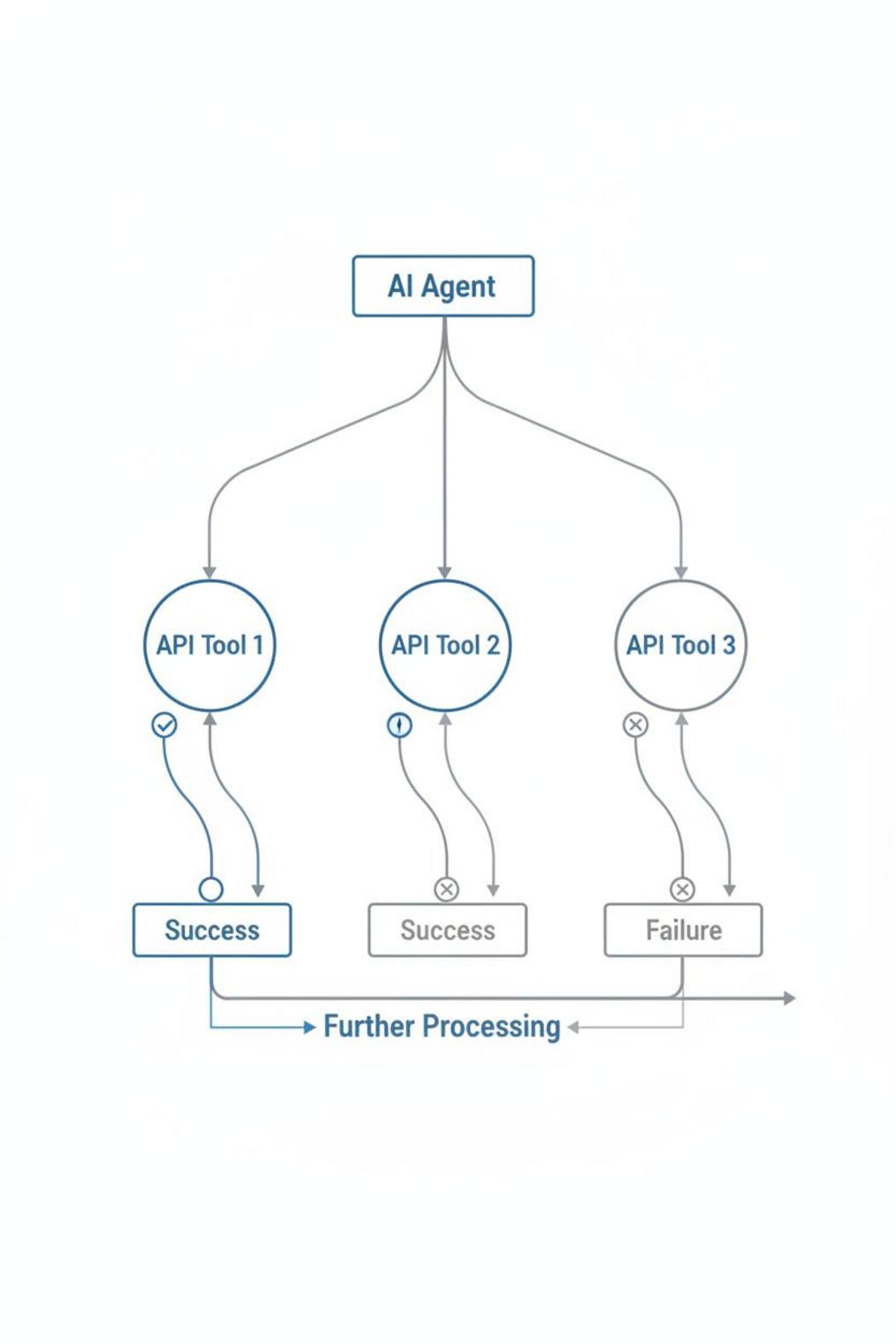
Tool use accuracy is one of the most underweighted dimensions when teams think about how to evaluate AI agent performance. Most early eval frameworks anchor on outcomes — did the task complete, did the final output look correct — and treat the intermediate steps as a black box. That’s a mistake. An agent that reaches the right answer by calling the wrong tools, or by calling the right tools in the wrong order, is an agent sitting on a reliability cliff. It worked this time. It won’t always.
The practical definition of tool use accuracy breaks into at least three measurable sub-dimensions: selection accuracy (did the agent invoke the correct tool for a given subtask), parameterization accuracy (were the arguments passed to that tool correct and well-formed), and invocation frequency (did the agent call tools the appropriate number of times, avoiding both under-use and redundant polling). Most teams instrument the first dimension and ignore the other two, which is where the interesting failure modes actually live. An agent that selects the right search tool but constructs a malformed query, or that calls a database lookup four times when once would suffice, is generating real costs and real fragility.
Building a ground-truth dataset for tool use evaluation is genuinely hard work, and there’s no shortcut worth taking. You need traces — full execution logs that capture every tool call, every parameter set, every response received — and you need human-annotated reference traces for a representative sample of your task distribution. Reference traces should reflect expert judgment about not just correctness but efficiency: the minimal, well-formed path through the tool space that a skilled operator would take. From there, you can compute precision and recall over tool selections, parameter-level diff metrics, and sequence alignment scores against reference paths using something like Levenshtein distance over call sequences.
One practical signal that’s easy to overlook in agent testing is tool call failure rate — the proportion of invocations that return errors, timeouts, or malformed responses that the agent then has to recover from. A high failure rate often points to parameterization issues upstream, not infrastructure problems. If your agent is triggering 400-series errors at a 15 percent rate on API calls, the problem is almost certainly in how it’s constructing arguments, not in the API itself. Tracking this alongside your agent eval metrics gives you a diagnostic layer that pure outcome measurement never surfaces.
The deeper architectural point is that tool use accuracy functions as a leading indicator for task completion rate. Teams that instrument it early tend to catch systematic failure patterns — a specific tool being chronically misused, a parameter schema that the model misreads under certain prompt conditions — before those patterns compound into visible outcome failures. Evaluating at the tool call level is more expensive to set up than eval at the output level, but it’s where the mechanistic understanding of your agent’s behavior actually lives. If you want to know why your agent fails, not just when, this is where you look.
Building a Repeatable Agent Testing Harness

🔧 Related tools & reading:
📘 Designing Machine Learning Systems: an Iterative Process for Production-Ready Applications — $5.00 at Ebokify
🎧 Designing Machine Learning Systems – Audiobook, by Chip Huyen — $13.00 at Audiobooks.com
⚙️ Machine Learning System Design — $58.99 at Barnes & Noble
Before you can meaningfully interpret agent eval metrics, you need infrastructure that produces consistent, reproducible results. Ad hoc testing — running a prompt, eyeballing the output, shipping — is how subtle regressions go undetected for weeks. A proper testing harness doesn’t need to be elaborate, but it does need to be systematic: fixed inputs, deterministic or logged outputs, and a comparison baseline that survives across model versions and prompt changes.
The foundation is a curated task dataset that spans the realistic distribution of what your agent will encounter in production. This means covering not just the happy path but adversarial inputs, ambiguous instructions, multi-step dependencies, and failure-inducing edge cases. Each task entry should specify the input, the expected terminal state or output, the tools the agent is permitted to call, and any constraints on acceptable execution paths. Without that structure, you’re not running evals — you’re running demos.
Instrumentation matters as much as the dataset itself. Every agent run should emit a structured trace: which tools were called, in what order, with what arguments, and what each returned. This trace data is what lets you calculate tool use accuracy and task completion rate at the step level rather than just the final output level. An agent that reaches the right answer via a broken or inefficient tool-calling sequence is a liability, even if it scores well on surface-level outcome metrics. Capturing the full trajectory is what separates a testing harness from a simple pass/fail checker.
Scoring functions deserve careful design. Exact-match evaluation works for structured outputs like JSON or SQL, but most real agent tasks require partial-credit scoring — did the agent retrieve the right document even if the final answer was phrased poorly? Did it fail gracefully when a tool returned an error, or did it hallucinate a result? Layering deterministic checks for well-defined subtasks with model-assisted grading for open-ended outputs gives you coverage across both. The important thing is that each scoring function is itself tested and versioned, so you know when your eval logic changes, not just when your agent does.
Finally, the harness needs to run on a schedule and gate deployment. Understanding how to evaluate AI agent performance in theory is considerably less useful than having a CI pipeline that blocks a merge when task completion rate drops below your defined threshold or when tool call error rates spike. Treat your eval suite as a first-class artifact: it should live in version control alongside the agent code, get updated when capabilities expand, and be reviewed as seriously as the agent logic itself. The teams that discover regressions in staging rather than production aren’t lucky — they built the scaffolding to catch them early.
Latency, Cost, and Regression Tracking in Agent Evals
🔧 Related tools & reading:
📘 Designing Machine Learning Systems: an Iterative Process for Production-Ready Applications — $5.00 at Ebokify
🎧 Designing Machine Learning Systems – Audiobook, by Chip Huyen — $13.00 at Audiobooks.com
⚙️ Machine Learning System Design — $58.99 at Barnes & Noble
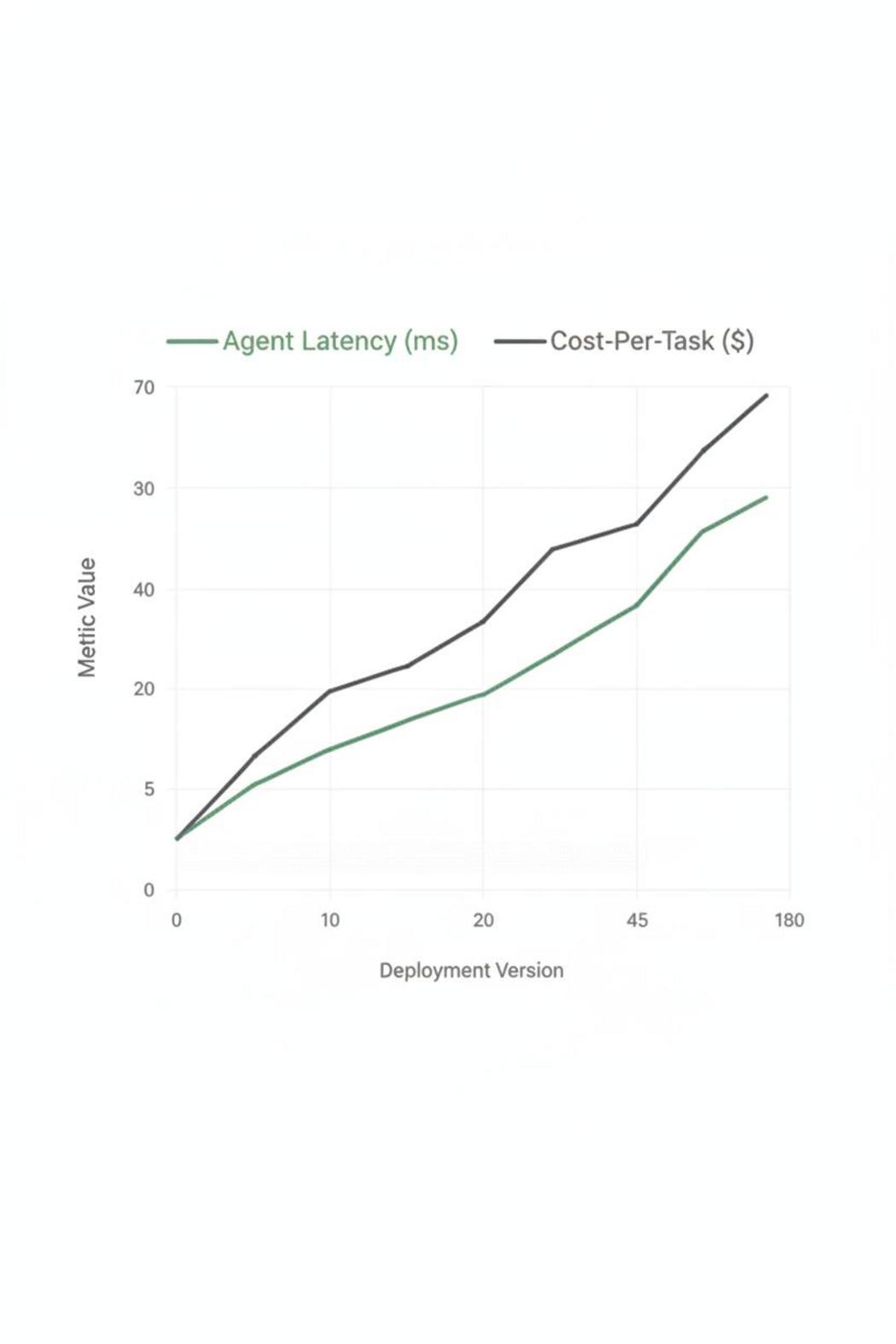
Most teams evaluating agent performance start with the obvious signals: did the agent complete the task, did it call the right tools, did the output meet the acceptance criteria. Those are necessary. But they’re not sufficient. Once you move past prototype stage, three operational dimensions start to matter enormously — latency, cost, and regression tracking — and these are where most evaluation frameworks fall apart in practice.
Latency in agentic systems is not the same problem as latency in a single-inference API call. A multi-step agent that chains tool calls, spawns subagents, or loops on a reasoning trace accumulates delay at each node. When you’re working through how to evaluate AI agent performance at scale, you need to decompose latency into its constituent parts: time-to-first-tool-call, per-step execution time, and total wall-clock time to task resolution. Aggregate P95 numbers hide the pathological cases — the long-tail runs that loop unnecessarily, retry on failed tool calls, or stall waiting on external dependencies. Instrument at the span level, not just the trace level, and you’ll start to see where the real bottlenecks live.
Cost tracking is equally granular. Token consumption per agent run is the obvious metric, but it conflates prompt overhead, reasoning tokens, and output generation in ways that obscure where money is actually being spent. A well-instrumented eval pipeline breaks this down by model call, tracks tool invocation frequency, and monitors whether your agent is generating unnecessary intermediate outputs that inflate context on subsequent steps. Task completion rate per dollar is a more useful north-star metric than raw success rate, especially when you’re comparing architectures or deciding whether a cheaper model swap degrades reliability enough to matter.
Regression tracking is where agent eval metrics discipline pays off most. Unlike static ML models, agents are sensitive to prompt changes, tool schema updates, model version rollouts, and shifts in the external APIs they depend on. A capability that worked reliably in June can quietly degrade in August without a single line of your code changing. The practical solution is a versioned eval suite run on every deployment artifact — not just a held-out benchmark, but a suite of representative task traces with known expected behavior, scored against deterministic criteria where possible and LLM-as-judge where not. Tracking pass rates across eval suite versions, not just point-in-time scores, gives you a regression signal that’s actually actionable.
The teams doing agent testing well treat these three dimensions as first-class engineering concerns, not afterthoughts bolted onto a vibe-check review process. Latency, cost, and regression data belong in your CI pipeline, surfaced in dashboards alongside task completion and tool use accuracy, so that the team has a complete operational picture rather than a selective one. The gap between agents that demo well and agents that perform reliably in production almost always lives in this operational layer.
Conclusion
Knowing how to evaluate AI agent performance is what separates a prototype from a production system teams can actually rely on. Define task-specific metrics before you build, instrument every action and decision boundary, and run evaluations continuously—not just at launch. Combine automated scoring with targeted human review, track regression over time, and treat every failure as a signal worth routing back into your design. The builders who ship trustworthy autonomous agents are the ones who never stop measuring. Evaluation is not a one-time gate—it is the continuous feedback loop that makes agent systems trustworthy enough to operate autonomously.
Questions or something we should be covering? Reach out via the Contact page. ⚡